

Lucy Sutherland, Director of Insights and Trends at Temple & Webster, shares what the company's rightsizing survey found about spare bedrooms, apartment living and the homes Australians want.
Book a 30 minute demo of the Pluss app and Community Manager.
Book a demoRelated Retirement village software
About this episode
Temple & Webster worked with Zenith Media to survey just over 1,000 Australians aged 25 to 74 for the report. Lucy says rightsizing means a home that suits your stage of life, which takes in family size and income as well as floor space.
Lucy tells Shaun what keeps people in large homes and what puts them off apartments. She describes buildings with small apartments and shared, bookable rooms, and the growth of granny flats and other multi-generational options. She also argues Australians need to see long-term renting differently.
Episode guide
- 00:43 Why Temple & Webster ran the study
- 02:11 The decline of the detached house
- 06:17 What rightsizing means
- 07:48 Why Australians want two spare bedrooms
- 17:03 Shared amenities in apartment buildings
- 24:20 Why people hesitate about apartments
- 25:50 Multi-generational living and granny flats
- 44:29 Long-term renting and build to rent
Key points
Two spare bedrooms
Lucy says the survey found the ideal home has two spare bedrooms. People with two were the least likely to move, while people with one or none wanted to upsize. People with three or more were looking to downsize. The most common uses for spare rooms were a home office and a guest room.
From 08:10
Features people find hardest to give up
Lucy says a garden and a lock-up garage were the features people found hardest to give up. Older Australians in particular wanted a lock-up garage for security. She suspects many people keep a spare room out of habit, though she notes she has no research to back that.
From 12:07
Bookable shared rooms
Lucy toured a Melbourne build-to-rent building with small apartments and a floor of shared facilities. Residents could book a dining room, a lounge or a kids' cinema for occasions, so they did not pay rent on rooms they rarely use. She notes that some retirement villages offer rentable guest suites, which reduces the need for a spare room.
From 21:29
Multi-generational options
Lucy says affordability is pushing families towards multi-generational living, which helps both older Australians and young families. She says Temple & Webster's work in modular housing shows granny flats in the garden are a real option, with the family in the main house. She also knows of a family buying neighbouring apartments or a duplex so the generations can support each other.
From 26:06
Timing a move to a smaller home
Lucy says people who delay too long can miss the window to live independently in a smaller home. They may go straight into care or hospital instead. Her survey found older Australians want to live close to shops and the services they need.
From 33:25
Long-term renting in Australia and Europe
Lucy says Australians tend to treat renting as a way to save for a home, while long-term renting is normal at all ages in Europe. She says European leases give tenants a security that Australian leases often lack. She sees build-to-rent buildings, owned and managed by one organisation, offering longer leases and more amenities.
From 44:29
Book a 30 minute demo of the Pluss app and Community Manager.
Book a demoQuotes
“It's about stage of life, not necessarily about the physical size of your home.”
Lucy Sutherland, 07:26
“I think that having a spare bedroom is a historical thing that we think every house needs one.”
Lucy Sutherland, 10:48
“If you're going to right size you have to do it whilst you can still enjoy it.”
Lucy Sutherland, 33:45
Questions answered
What does rightsizing mean?
Lucy says rightsizing means finding a home that suits your stage of life. It takes in family size and income as well as the size of the home, and it applies to all age groups.
Why do people hesitate to move into apartments?
Lucy says people worry about losing green space, lock-up garaging and internal space. Privacy, noise and closeness to neighbours also hold them back. She thinks some of these worries are outdated perceptions the apartment market needs to address.
Who took part in the Temple & Webster survey?
Lucy says Temple & Webster worked with Zenith Media to survey just over 1,000 Australians aged 25 to 74. The sample represented the Australian population across all geographic areas.
About the guest
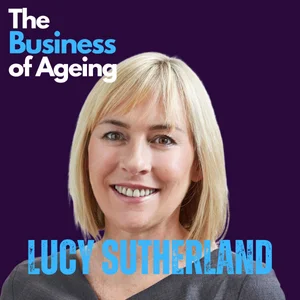
Lucy Sutherland is Director of Insights and Trends at Temple & Webster, an online furniture and homewares retailer. She compiled the research paper The Future of Rightsizing in Australian Housing.
Read next
Blog post Define your retirement community's UVP to attract residents
Blog post What a village app shows you between the enquiry and the decision
More episodes
Episode 9 MaryAnn de Mestre on inheritance impatience
Episode 11 Michael Doneman on the role of AI in elderhood
The Business of Ageing All 14 episodes
Pluss Communities makes The Business of Ageing, along with an app for residents and staff software for retirement villages, aged care homes and land lease communities.
Book a 30 minute demo of the Pluss app and Community Manager.
Book a demo